The Cellular Conversation
The centrifuge creates the cellular gradient. The collection strategy shapes which cells become part of the final preparation and the biological conversation that follows.
Three preparations can create three different signaling environments.
PRP should not be defined by platelet concentration alone. Leukocyte composition, activation state, tissue context, dose, and processing technique all influence the conversation.
Leukocyte-Poor PRP
Lower-leukocyte pathwayNeutrophil-Rich PRP
Innate inflammatory pathwayCan your PRP system control the conversation?
The separation device, centrifugation stability, draw-volume capacity, recovery efficiency, and collection method all influence which cells reach the final preparation.
How many platelets should participate?
Several authors have proposed platelet dose targets in the range of 4 to 10 billion platelets for selected applications, while optimal dosing remains an active area of investigation.
Concentration is not the same as dose.
A high concentration factor can still produce a modest total dose when the starting blood volume is small. Absolute platelet dose depends on the patient’s baseline platelet count, whole-blood draw volume, system recovery, and final processing losses.
The count does not fully describe the cellular payload.
Standard CBC systems quantify platelet number. They generally do not fully characterize platelet maturity, activation state, metabolic activity, or functional heterogeneity.
Young and old platelets may carry different signaling capacity.
Emerging hematology research suggests that immature or reticulated platelets may have greater RNA content, metabolic activity, and granule signaling capacity than older circulating platelets. Mean platelet volume and immature platelet fraction can provide additional context, although these measures are not routinely available in many regenerative medicine offices.
The baseline CBC sets the limits of the preparation.
Every patient begins with a different platelet inventory. Precision dosing starts before the centrifuge spins.
Small draws create mathematical ceilings.
A patient with a baseline platelet count of 200 M/µL contributes approximately 3.4 billion platelets to a 20 mL sample before processing losses, assuming roughly 17 mL of actual whole blood after anticoagulant volume.
Tailor the draw to the intended dose.
Depending on the baseline platelet count, recovery efficiency, and treatment objective, a larger collection may be required. Personalized draw volume allows dose to be planned rather than assumed.
Model the Patient’s Dose →The cellular gradient is a map, not a single line.
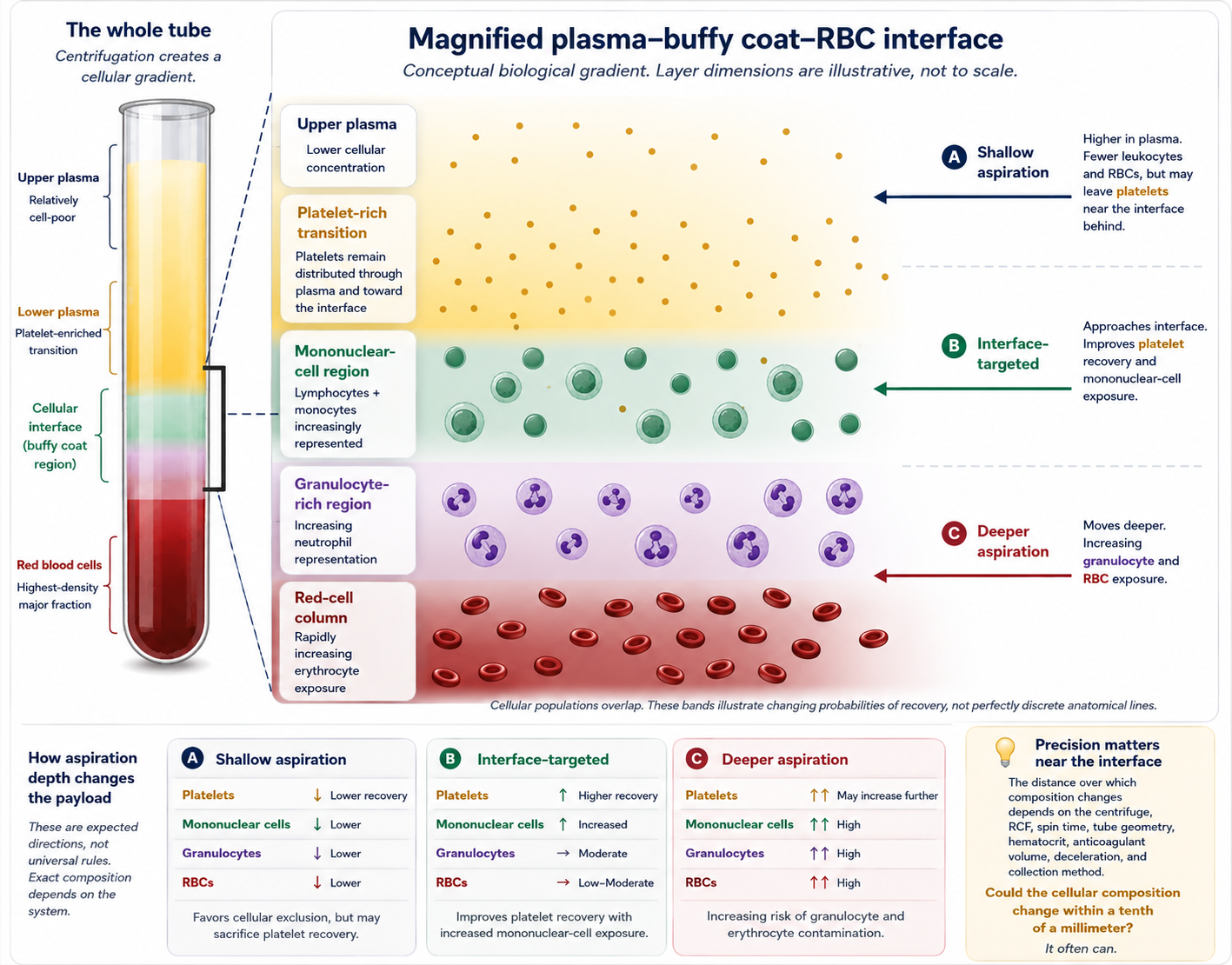
Density, size, shape, centrifugal force, spin duration, vessel geometry, and deceleration all influence where cellular populations stratify.
The conversation can change within a tenth of a millimeter.
The buffy coat is the white interface between plasma and red blood cells. Its upper portion may contain platelets and mononuclear cells, while its deeper portion is generally more granulocyte rich. The PRPdose “Golden Zone” spans the lower plasma and upper buffy coat; moving deeper may increase neutrophil and red-cell recovery, while staying too high may sacrifice platelet recovery and monocytes.
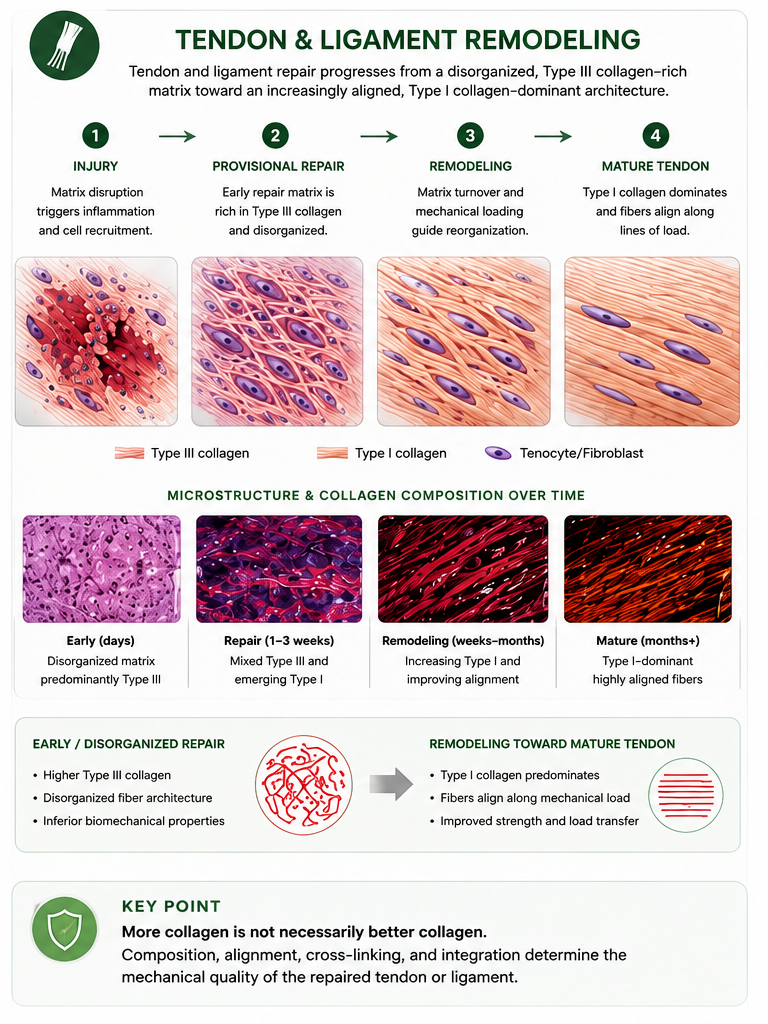
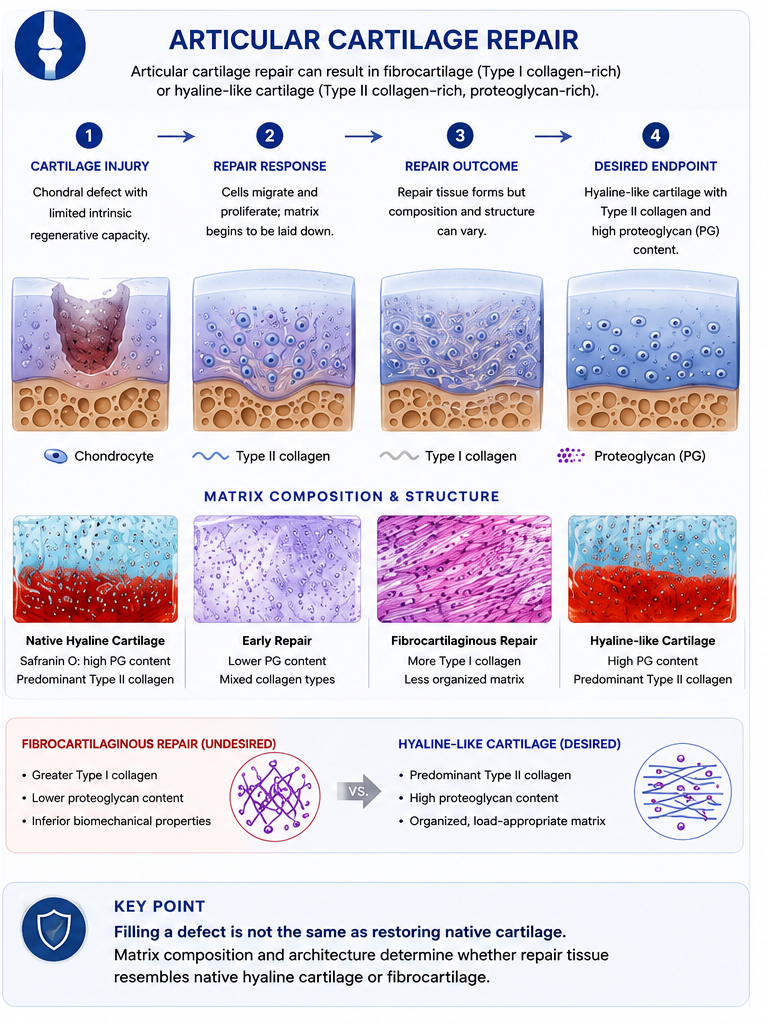
The desired matrix depends on the tissue being repaired.
Macrophage signaling and extracellular-matrix remodeling occur before the collagen endpoint. The ideal collagen architecture is not the same in tendon and articular cartilage.
More organized remodeling
Illustrative tissue-specific outcomes when inflammation progresses toward resolution.
Less mature or disorganized remodeling
Illustrative patterns associated with persistent inflammatory and proteolytic pressure.
Measure the dose. Evaluate the system. Understand the conversation.
Platelet quantity and cellular composition answer different questions. The next step is to test both the mathematics and the hardware.
Quantify the dose
Use the patient’s baseline CBC, draw volume, and processing recovery to estimate the total platelet dose available for treatment.
Open PRPdose Calculator →Evaluate the hardware
Review recovery efficiency, RBC exclusion, cellular selectivity, centrifuge stability, draw-volume capability, and workflow repeatability.
Open the PRP System Audit →